



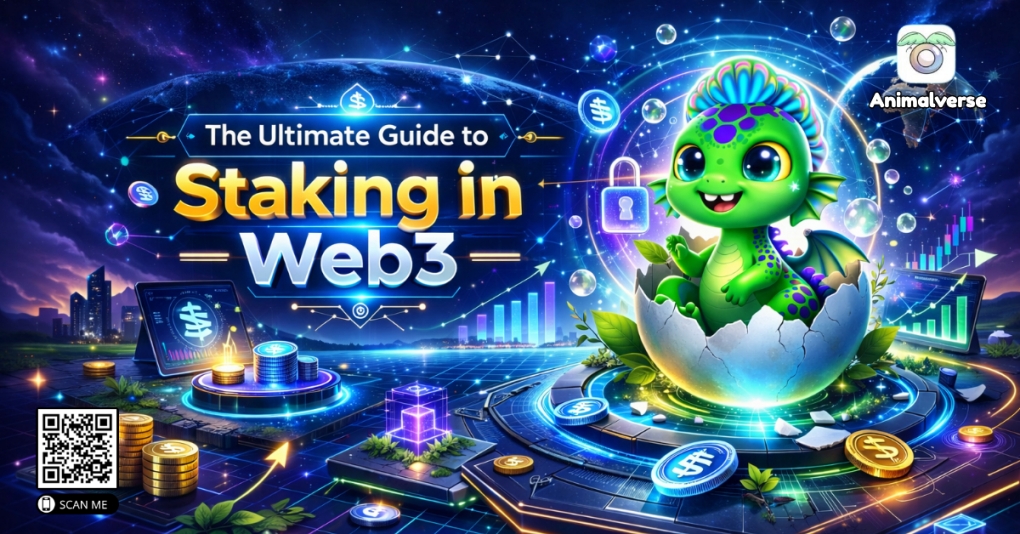
Over the past few years, the word staking has evolved from a niche technical concept into one of the most important pillars of the decentralized digital economy. As blockchain technology continues to mature, staking has become a fundamental mechanism for securing networks, generating passive income, and enabling community participation.
Introduction: The Rise of Staking in the Web3 Economy
Unlike traditional financial systems that rely on centralized institutions, staking represents a revolutionary shift toward decentralized ownership. It allows users to actively contribute to the security and governance of blockchain networks while earning rewards.
Within ecosystems like Animalverse.social, staking is not just a financial tool — it is a core engagement layer that connects users, creators, gamers, and communities.
Table of Contents
Let’s dive in.
What Is Staking?
The Definition of Staking
Staking refers to the process of locking cryptocurrency tokens in a blockchain network to support its operations, such as validating transactions and securing the network.
In return for committing these tokens, participants earn rewards — typically in the form of additional tokens.
Staking is commonly associated with Proof-of-Stake (PoS) blockchain systems.
Simple Explanation
Think of staking like putting money into a savings account:
- You deposit funds
- The bank uses them to operate
- You earn interest
In staking:
- You deposit tokens into a network
- The network uses them to validate transactions
- You earn staking rewards
Why Staking Exists
Staking serves three key purposes:
1. Network Security
Staked tokens act as collateral. Validators risk losing their stake if they act dishonestly.
2. Decentralization
Staking allows anyone to participate in network validation.
3. Incentives
Rewards encourage users to hold tokens long term.
How Staking Works
Proof-of-Stake Mechanism
Traditional blockchains use mining. Staking replaces mining with token locking.
The basic process:
- Users stake tokens
- Validators are selected
- Transactions are verified
- Rewards are distributed
Validator Selection
Most staking networks select validators based on:
- Amount of tokens staked
- Length of staking duration
- Randomized algorithms
Higher stake generally increases the probability of being chosen.
Staking Rewards Distribution
Rewards come from:
- Transaction fees
- Network inflation
- Protocol incentives
Rewards vary depending on:
- Network rules
- Total tokens staked
- Validator performance
Types of Staking
Staking is not one-size-fits-all. Different models exist.
1. Validator Staking
Users run nodes and validate transactions.
Requirements:
- Large token holdings
- Technical knowledge
- Hardware setup
Best for: advanced users.
2. Delegated Staking
Users delegate tokens to validators.
Benefits:
- Passive income
- No technical setup
This is the most common staking method.
3. Liquid Staking
Users stake tokens but receive liquid derivatives that can still be traded.
Advantages:
- Maintains liquidity
- Enables DeFi participation
4. Locked Staking
Tokens are locked for a fixed period.
Higher lock duration usually means:
- Higher rewards
- Reduced flexibility
5. Flexible Staking
No lock period.
Users can withdraw anytime but earn lower rewards.
Benefits of Staking
Staking offers numerous advantages.
Passive Income Generation
Staking provides consistent yield without active trading.
This makes staking ideal for long-term investors.
Network Participation
Staking empowers users to participate in governance.
Token holders can vote on:
- Protocol upgrades
- Community proposals
- Ecosystem development
Price Stability
Staking reduces circulating supply.
This can help stabilize token prices.
Community Growth
Staking encourages long-term engagement.
Users become invested in ecosystem success.
Risks of Staking
Despite benefits, staking involves risks.
Market Volatility
Token prices may drop while locked.
Rewards may not offset losses.
Lock-up Periods
Some staking requires long commitment.
Early withdrawal may incur penalties.
Validator Risk
Delegating to unreliable validators can cause:
- Reward loss
- Slashing penalties
Smart Contract Risks
DeFi staking platforms may be vulnerable to hacks.
Staking Strategies
To maximize rewards, users should consider strategies.
Diversification
Stake across multiple networks to reduce risk.
Long-Term Holding
Higher rewards often come with longer lock periods.
Validator Research
Choose validators with:
- High uptime
- Good reputation
- Fair commission rates
Re-Staking Rewards
Compounding increases long-term returns.
Staking in Social Ecosystems
Staking is no longer limited to infrastructure.
It is becoming a core component of social platforms.
Social Staking
Users stake tokens to:
- Access premium features
- Support creators
- Participate in community governance
Creator Economy
Staking enables new revenue models:
- Fans stake tokens to support creators
- Creators earn passive rewards
- Communities grow organically
Staking in Gaming Ecosystems
Gaming platforms are integrating staking mechanics.
Play-to-Stake Model
Players earn tokens and stake them for:
- In-game rewards
- Exclusive items
- Governance power
GameFi Staking Benefits
- Enhances player retention
- Creates long-term engagement
- Strengthens game economies
Staking in Animalverse.social
Animalverse.social integrates staking into its ecosystem.
Community Governance
Users can stake tokens to vote on:
- Platform upgrades
- New features
- Community proposals
Creator Support
Fans can stake tokens behind creators.
Benefits include:
- Exclusive content access
- Reward sharing
- Reputation growth
Gaming Integration
Animalverse integrates staking into GameFi experiences:
- Stake to unlock levels
- Earn rare NFTs
- Participate in tournaments
Social Rewards
Staking can unlock:
- Boosted visibility
- Higher engagement rewards
- Special platform privileges
Future of Staking
Staking is evolving rapidly.
Multi-Chain Staking
Cross-chain interoperability will allow seamless staking.
AI-Driven Staking Optimization
AI tools will optimize reward strategies.
SocialFi Expansion
Staking will power decentralized social networks.
Institutional Adoption
Financial institutions are beginning to offer staking services.
Conclusion: Why Staking Is the Backbone of Web3
Staking represents one of the most transformative innovations in blockchain technology.
It empowers individuals to:
- Secure networks
- Earn passive income
- Participate in governance
- Build communities
In ecosystems like Animalverse.social, staking goes beyond finance — it becomes a foundation for social interaction, gaming, creator economies, and decentralized ownership.
As Web3 continues to evolve, staking will remain a cornerstone of the digital economy.
The future belongs to communities that stake together.
Reference: Verster Community
https://animalverse.social/the-ultimate-guide-to-staking-in-web3/
https://animalverse.social/members/0x896a1a936033002e9ac5a8f843bd39c296899f5d/activity/34466/
Join our gang by purchasing the Animalverse Club NFT, which is the key to accessing a ton of benefits.
Animalverse SoicialFi is a web3 social media platform de signed to connect users around the world without the influence of algorithms, promoting equal access to information. The platform aims to create a decentralized environment where users can freely share and consume content and send crypto, which is fully consistent with the principles of blockchain technology. Let’s be a part of AVC ecosystem Community BlackMarketplace Groups Games Jobs Financial Blog News
FAQ: Staking in Web3
What is staking?
Staking is the process of locking cryptocurrency tokens in a blockchain network to help secure it and validate transactions while earning rewards.
How does staking work?
Users deposit tokens into a staking system, where they are used to validate transactions. In return, users receive staking rewards.
Is staking the same as mining?
No. Mining requires computational power, while staking requires holding and locking tokens.
What is Proof-of-Stake (PoS)?
Proof-of-Stake is a consensus mechanism where validators are chosen based on how many tokens they stake.
Can beginners participate in staking?
Yes. Many platforms allow simple staking with just a few clicks.
How do staking rewards work?
Rewards are generated from transaction fees and newly issued tokens.
How much can I earn from staking?
Returns vary widely, typically between 3% and 20% annually.
Are staking rewards guaranteed?
No. Rewards depend on network performance and market conditions.
How often are rewards paid?
It depends on the blockchain. Some distribute daily, others weekly.
Can rewards be compounded?
Yes. Many users reinvest rewards to increase future earnings.
Is staking risk-free?
No. Risks include price volatility, validator failure, and smart contract vulnerabilities.
What is slashing?
Slashing is a penalty where staked tokens are partially lost due to validator misconduct.
Can I lose my staked tokens?
Yes, especially if the validator behaves maliciously or the platform is hacked.
What happens if token prices drop?
Your rewards may not compensate for market losses.
Are staking platforms safe?
Safety varies. Always research platforms before staking.
What is delegated staking?
It allows users to delegate tokens to validators without running a node.
What is liquid staking?
Liquid staking provides tradable tokens representing staked assets.
What is locked staking?
Locked staking requires tokens to remain staked for a fixed period.
What is flexible staking?
Flexible staking allows withdrawal at any time but offers lower rewards.
What is DeFi staking?
DeFi staking involves locking tokens in decentralized finance protocols to earn yield.
Do I need a minimum amount to stake?
Yes. Each network sets minimum staking requirements.
Do I need technical skills?
Not necessarily. Most platforms offer user-friendly staking options.
Can I unstake anytime?
It depends. Some networks require an unstaking waiting period.
What is an unstaking period?
It is the time required before tokens become withdrawable.
Can I stake multiple tokens?
Yes. Many users diversify across several staking assets.
How does staking work in social platforms?
Users stake tokens to unlock features, support creators, and participate in governance.
How does staking work in gaming?
Players stake tokens to earn rewards, access premium content, or gain governance rights.
Can staking increase community engagement?
Yes. Staking encourages long-term participation and loyalty.
Why is staking important in Web3?
It supports decentralization, security, and community ownership.
What is the future of staking?
Staking will expand into multi-chain systems, AI optimization, SocialFi, and GameFi ecosystems.
.