



Smart contract technology has become one of the most important foundations of blockchain innovation. A smart contract is a self-executing digital agreement written in code, deployed on a blockchain network, and executed automatically when predefined conditions are met. Unlike traditional contracts that rely on intermediaries such as lawyers, banks, or escrow services, smart contracts are enforced by cryptographic logic and decentralized consensus.
Introduction to Smart Contracts
Since their early conceptualization in the 1990s and practical implementation with Ethereum in 2015, smart contracts have evolved into a core infrastructure for Web3, decentralized finance (DeFi), NFTs, DAOs, gaming, supply chain management, and enterprise blockchain systems. As of 2026, smart contracts are no longer experimental—they are mission-critical components of modern digital economies.
This comprehensive guide explores smart contracts in depth, covering their definition, history, architecture, benefits, limitations, use cases, security best practices, legal considerations, and future trends. The article is optimized for “Smart contract” and written for developers, investors, businesses, and researchers seeking high-quality, up-to-date knowledge.
Table of Contents

What Is a Smart Contract?
A smart contract is a program that runs on a blockchain and automatically enforces the terms of an agreement. Once deployed, the contract operates autonomously without requiring further human intervention.
Key Characteristics of Smart Contracts
- Self-executing: Automatically performs actions when conditions are satisfied
- Immutable: Code cannot be changed after deployment (in most blockchains)
- Transparent: Publicly verifiable on the blockchain
- Trust-minimized: Reduces reliance on intermediaries
- Deterministic: Produces the same output for the same input across all nodes
In simple terms, a smart contract is “code as law.” The logic embedded in the contract replaces traditional enforcement mechanisms.
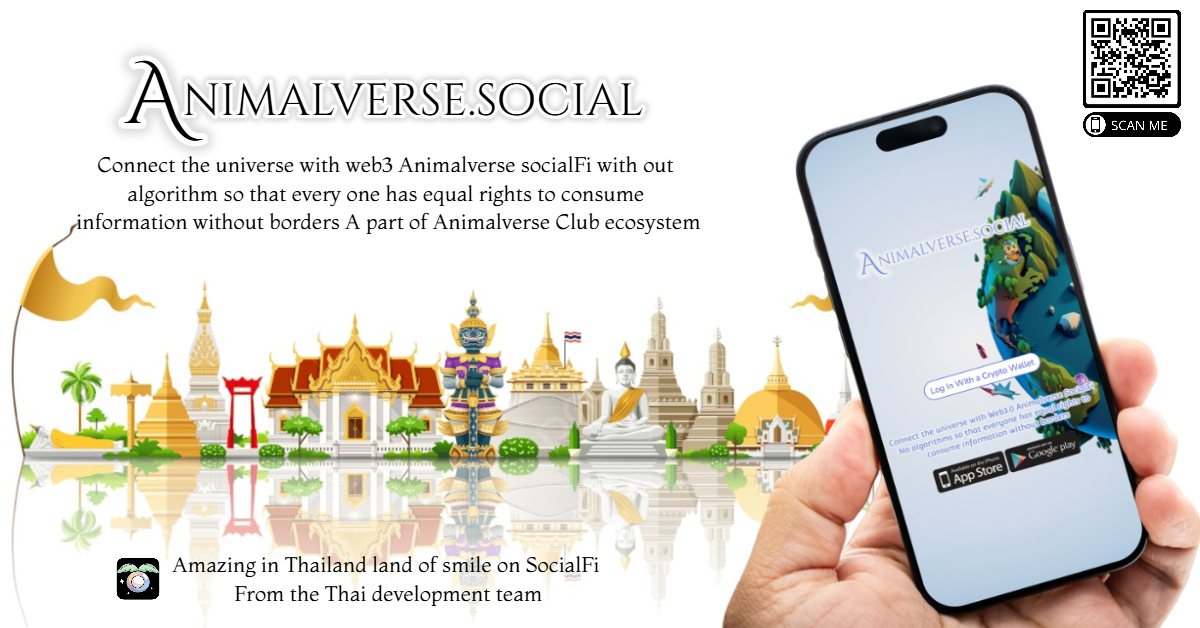
Animalverse SoicialFi is a web3 social media platform designed to connect users around the world without the influence of algorithms, promoting equal access to information. The platform aims to create a decentralized environment where users can freely share and consume content and send crypto, which is fully consistent with the principles of blockchain technology.
History and Evolution of Smart Contracts
Early Concept
The term smart contract was first introduced by computer scientist Nick Szabo in the mid-1990s. Szabo envisioned digital contracts that could automatically execute and enforce terms without relying on centralized authorities.
Blockchain Era
Smart contracts became practical with the launch of Ethereum in 2015. Ethereum introduced a Turing-complete virtual machine (EVM), enabling developers to write complex decentralized applications (dApps).
Modern Smart Contracts (2020–2026)
Over the past decade, smart contracts have expanded beyond Ethereum to:
- EVM-compatible chains (BNB Chain, Polygon, Avalanche)
- Non-EVM chains (Solana, Cardano, Near, Aptos)
- Layer 2 solutions (Optimism, Arbitrum, zkSync)
As of 2026, smart contracts support advanced features such as modular architectures, account abstraction, cross-chain interoperability, and zero-knowledge proofs.

How Smart Contracts Work
Smart Contract Architecture
A typical smart contract system consists of:
- Blockchain network – Stores and executes the contract
- Contract code – Defines rules and logic
- Transactions – Trigger contract execution
- Consensus mechanism – Ensures validity of execution
Execution Flow
- A user sends a transaction to the smart contract
- Network nodes validate the transaction
- Contract logic executes deterministically
- State changes are recorded on the blockchain
Once deployed, a smart contract cannot be stopped or altered unless explicitly designed with upgrade mechanisms.
Smart Contract Programming Languages
Solidity
The most widely used smart contract language, primarily for Ethereum and EVM-compatible blockchains.
Key features:
- JavaScript-like syntax
- Strong developer ecosystem
- Extensive tooling and libraries
Vyper
A Python-inspired language focused on security and simplicity.
Rust
Used for smart contracts on Solana, Near, and Polkadot ecosystems.
Move
Developed originally for Diem and now used by Aptos and Sui, emphasizing resource safety.
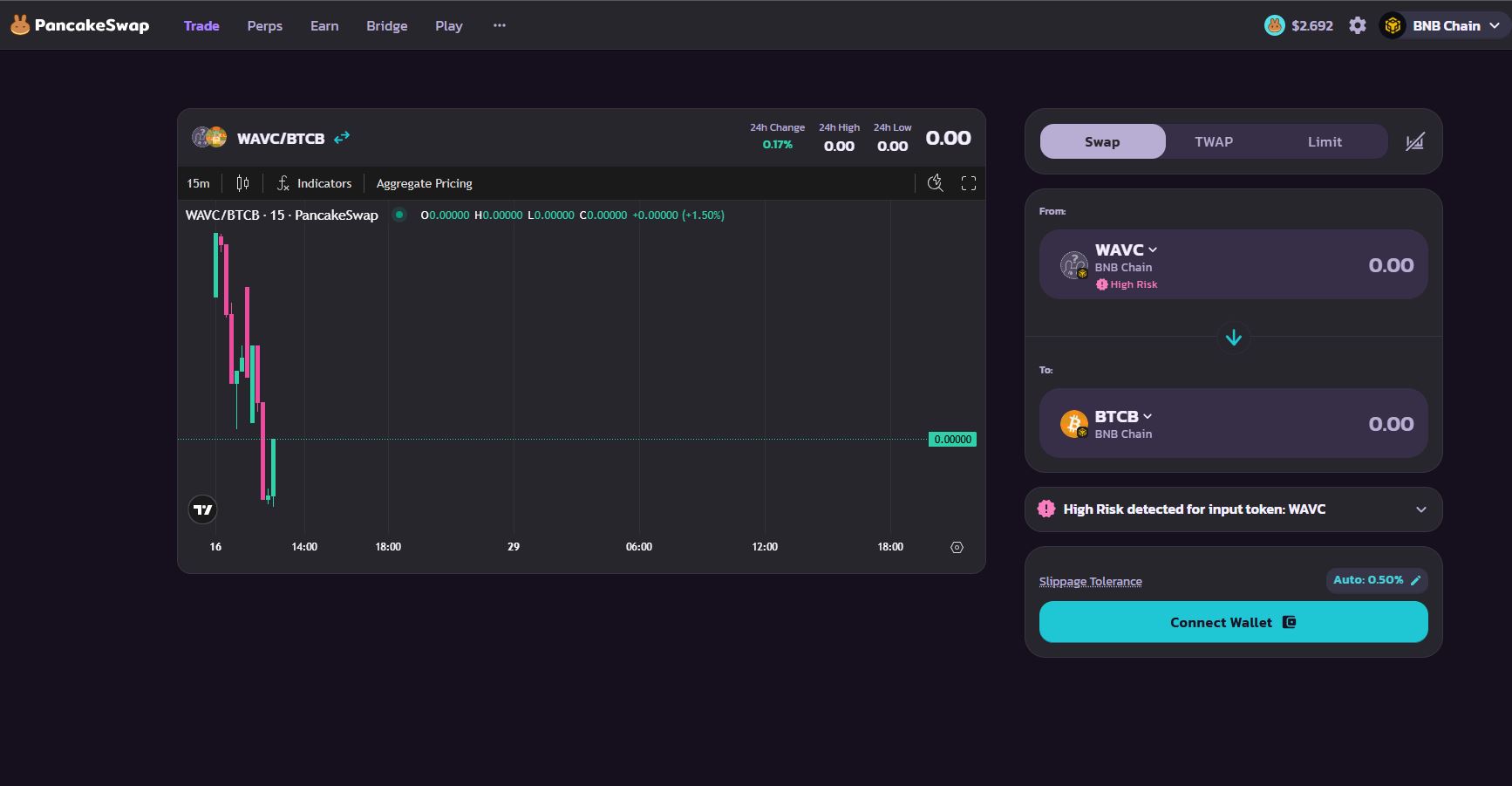
Get some $AVC for use on Animalverse SocialFi in Decentralized exchange Pancakeswap
Types of Smart Contracts
1. Financial Smart Contracts
Used in DeFi protocols for:
- Lending and borrowing
- Decentralized exchanges (DEXs)
- Stablecoins
- Derivatives and synthetic assets
2. NFT Smart Contracts
Enable:
- Token minting
- Royalty enforcement
- Ownership transfers
3. DAO Smart Contracts
Govern decentralized organizations by:
- Managing treasuries
- Enabling on-chain voting
- Executing proposals automatically
4. Enterprise Smart Contracts
Used in:
- Supply chain tracking
- Trade finance
- Insurance automation
Benefits of Smart Contracts
Automation and Efficiency
Smart contracts eliminate manual processes, reducing delays and errors.
Cost Reduction
By removing intermediaries, businesses save operational and legal costs.
Transparency and Trust
All transactions are publicly verifiable, increasing accountability.
Security
Cryptographic execution reduces the risk of fraud when properly audited.
Global Accessibility
Smart contracts operate 24/7 without geographical limitations.

Limitations and Challenges of Smart Contracts
Code Vulnerabilities
Bugs in smart contracts can lead to irreversible losses.
Scalability Issues
Network congestion and high gas fees can impact usability.
Immutability Risks
Errors cannot be fixed easily after deployment.
Legal Uncertainty
Smart contracts may not always align with existing legal frameworks.
Smart Contract Security Best Practices
Auditing
Professional security audits are essential before deployment.
Formal Verification
Mathematically proves contract correctness.
Bug Bounties
Encourage community-driven vulnerability discovery.
Upgradability Patterns
Use proxy contracts carefully to allow improvements.

Real-World Use Cases of Smart Contracts
Decentralized Finance (DeFi)
Smart contracts power lending protocols, automated market makers, and yield farming systems.
NFTs and Digital Ownership
Enable verifiable ownership of digital assets.
Gaming and Metaverse
Used for in-game assets, marketplaces, and play-to-earn economies.
Supply Chain Management
Provide transparent tracking of goods and logistics.
Insurance
Automate claims processing using oracles.
Smart Contracts and Oracles
Smart contracts cannot access external data directly. Blockchain oracles bridge this gap by providing off-chain data such as:
- Price feeds
- Weather data
- Event outcomes
Decentralized oracle networks are critical for secure smart contract execution.
Legal and Regulatory Considerations
Are Smart Contracts Legally Binding?
In many jurisdictions, smart contracts are recognized if they meet traditional contract requirements:
- Offer
- Acceptance
- Consideration
Compliance Challenges
- KYC/AML integration
- Data privacy regulations
- Jurisdictional conflicts
Governments worldwide are gradually adapting legal frameworks to accommodate smart contracts.
Smart Contracts vs Traditional Contracts
| Feature | Smart Contract | Traditional Contract |
|---|---|---|
| Execution | Automatic | Manual |
| Trust | Code-based | Intermediary-based |
| Transparency | Public | Private |
| Cost | Lower | Higher |

Smart Contract Platforms in 2026
Ethereum
The leading smart contract platform with the largest ecosystem.
Layer 2 Networks
Improve scalability and reduce transaction costs.
Alternative Blockchains
Offer high throughput and low latency for specialized use cases.
Future Trends in Smart Contracts
Account Abstraction
Improves user experience and security.
Cross-Chain Smart Contracts
Enable interoperability across blockchains.
AI-Integrated Smart Contracts
Use AI agents to optimize execution and decision-making.
Zero-Knowledge Smart Contracts
Enhance privacy and scalability.

Smart Contract Development Lifecycle
- Requirement analysis
- Architecture design
- Development
- Testing
- Auditing
- Deployment
- Monitoring
Best Practices for Businesses Using Smart Contracts
- Start with pilot projects
- Invest in audits
- Ensure regulatory compliance
- Educate stakeholders
Conclusion Smart contract
Smart contract technology has transformed how digital agreements are created, executed, and enforced. As blockchain adoption accelerates in 2026 and beyond, smart contracts will continue to power decentralized systems, enterprise automation, and global digital economies. Understanding how smart contracts work—and how to use them securely—is essential for anyone involved in blockchain, Web3, or digital transformation.
By leveraging best practices, robust security measures, and emerging innovations, smart contracts will remain a cornerstone of trustless, transparent, and efficient systems worldwide.
Reference: Verster Community
https://animalverse.social/smart-contract-the-complete-guide-update/
Join our gang by purchasing the Animalverse Club NFT, which is the key to accessing a ton of benefits.
Animalverse SoicialFi is a web3 social media platform de signed to connect users around the world without the influence of algorithms, promoting equal access to information. The platform aims to create a decentralized environment where users can freely share and consume content and send crypto, which is fully consistent with the principles of blockchain technology. Let’s be a part of AVC ecosystem Community BlackMarketplace Groups Games Jobs Financial Blog News

Smart Contract FAQ
What is a smart contract?
A smart contract is a self-executing program stored on a blockchain that automatically enforces and executes the terms of an agreement when predefined conditions are met.
How does a smart contract work?
Smart contracts work by using if–then logic written in code. When conditions are fulfilled, the contract executes automatically without intermediaries.
Are smart contracts legally binding?
In many jurisdictions, smart contracts are legally recognized if they meet traditional contract requirements such as consent, intent, and legality.
What blockchain supports smart contracts?
Popular blockchains supporting smart contracts include Ethereum, Solana, BNB Chain, Polygon, Avalanche, and Polkadot.
What programming languages are used for smart contracts?
Common smart contract languages include Solidity, Rust, Vyper, and Move.
What are smart contracts used for?
Smart contracts are used in DeFi, NFTs, gaming, DAOs, supply chain management, digital identity, and tokenized real-world assets.
What is the difference between a smart contract and a traditional contract?
Traditional contracts require intermediaries and manual enforcement, while smart contracts execute automatically on a blockchain.
Are smart contracts secure?
Smart contracts are secure by design, but vulnerabilities in code can lead to exploits if not properly audited.
What is a smart contract audit?
A smart contract audit is a professional security review that identifies vulnerabilities, logic flaws, and potential attack vectors in contract code.
Can smart contracts be changed after deployment?
Most smart contracts are immutable, but upgradeable contracts can be modified using proxy patterns if designed in advance.
What is a reentrancy attack in smart contracts?
A reentrancy attack occurs when a malicious contract repeatedly calls a vulnerable function before the previous execution is completed.
What are smart contract oracles?
Oracles provide smart contracts with off-chain data such as asset prices, weather conditions, or real-world events.
Why are oracles important for smart contracts?
Oracles enable smart contracts to interact with real-world data, expanding their functionality beyond on-chain information.
What is the role of smart contracts in DeFi?
Smart contracts automate lending, trading, staking, and yield farming without centralized intermediaries.
Can smart contracts handle real-world assets?
Yes, smart contracts can manage tokenized real-world assets like real estate, bonds, and commodities.
What is an upgradeable smart contract?
An upgradeable smart contract allows logic changes through proxy mechanisms while keeping the same contract address.
How much does it cost to deploy a smart contract?
Costs vary depending on the blockchain, network congestion, and contract complexity, ranging from a few dollars to hundreds.
What is gas in smart contracts?
Gas is the fee required to execute smart contract operations on blockchains like Ethereum.
What is the Ethereum Virtual Machine (EVM)?
The EVM is the runtime environment that executes smart contracts on Ethereum and EVM-compatible blockchains.
What is a DAO smart contract?
A DAO smart contract governs decentralized organizations by managing voting, treasury, and rule enforcement.
Can smart contracts work across multiple blockchains?
Yes, through cross-chain bridges and interoperability protocols, smart contracts can interact across networks.
What are common smart contract vulnerabilities?
Common vulnerabilities include reentrancy, integer overflow, access control issues, and oracle manipulation.
Are smart contracts transparent?
Yes, most smart contracts are publicly visible and verifiable on blockchain explorers.
What is a smart contract wallet?
A smart contract wallet is a programmable wallet that enables features like account abstraction, multisig, and social recovery.
How do smart contracts enable NFTs?
Smart contracts define NFT ownership, transfer rules, royalties, and metadata management.
Can smart contracts fail?
Smart contracts can fail due to bugs, poor design, or incorrect inputs, and failures are usually irreversible.
What is account abstraction in smart contracts?
Account abstraction allows smart contracts to act as user accounts, improving UX and security.
How are smart contracts tested?
They are tested using unit tests, testnets, formal verification, and simulated attack scenarios.
What is the future of smart contracts?
The future includes AI-integrated contracts, cross-chain automation, privacy-preserving execution, and enterprise adoption.